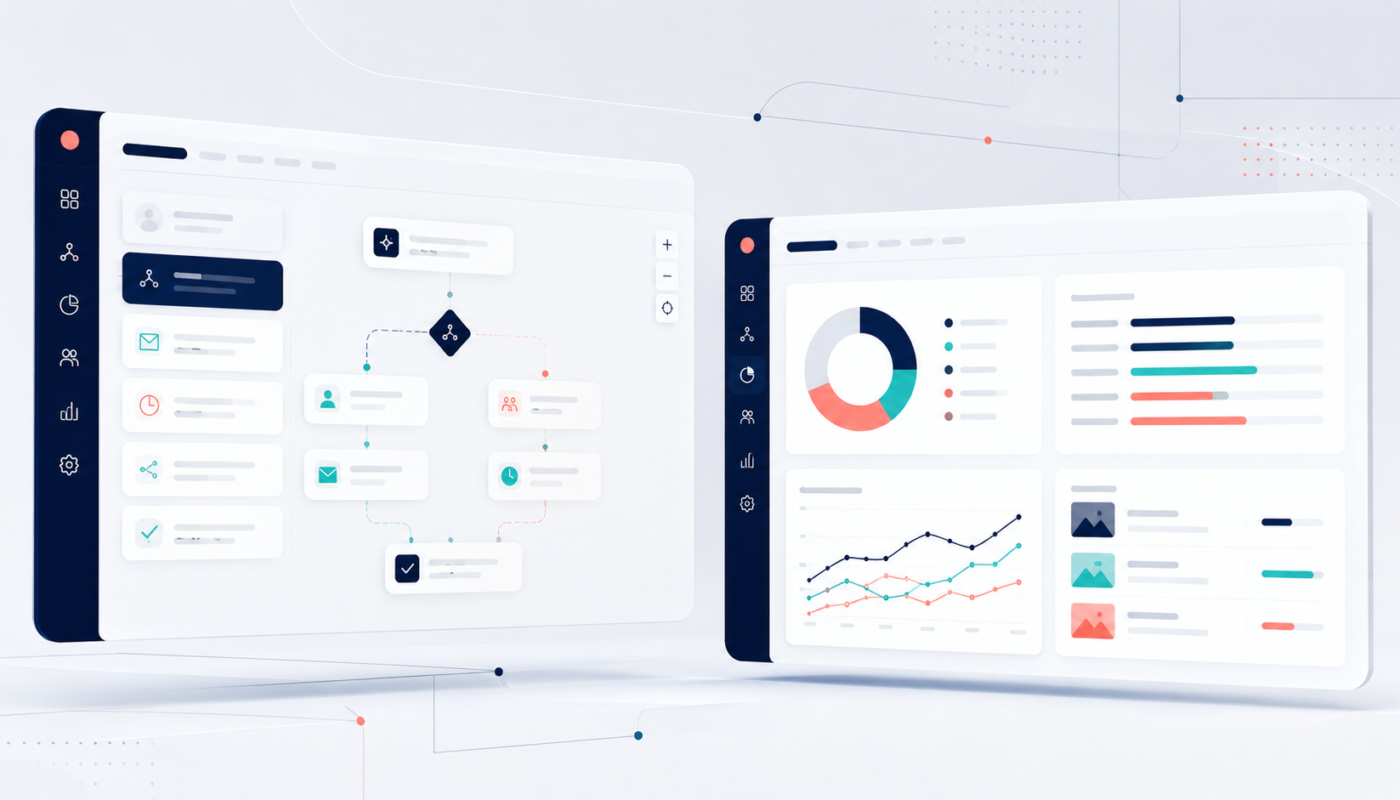
Adobe is sunsetting the Experience Cloud brand. It is replacing it with Adobe CX Enterprise, an AI-first platform built on an agent-based architecture. Creative and marketing functions now sit under one roof. The rebrand was formally announced last month. Customer deployments are now rolling. It is Adobe’s clearest signal yet that agentic marketing operations are the dominant pattern of the next decade.
What Adobe CX Enterprise Ships With
The Adobe CX Enterprise platform organises around three pillars: Brand Visibility, Customer Engagement, and Content Supply Chain. More than 10 production AI agents ship with the platform.
Adobe also introduces a new tier called “Coworkers.” These are persistent agents that hold enterprise memory across sessions. They learn from interactions over time. Adobe says 1,770 customers are already entitled to use the tier through a credit-based pricing model.
The Adobe Journey Optimizer B2B Edition is also splitting in two. A lower-entry Prime tier launches this quarter.
The Competitive Context: Salesforce, HubSpot, and the Shared Thesis
The competitive context matters. Salesforce, HubSpot, and Adobe now converge on a shared thesis. Marketing software is becoming infrastructure for AI agents, not interfaces for human marketers. AI agents are reshaping marketing operations across all three platforms simultaneously.
The three vendors are not building the same product. But the diagrams are starting to look alike. Differentiation will come from agent libraries and data foundations. It will also come from the willingness of customers to commit to one ecosystem.
Salesforce is anchoring Agentforce with a native content layer via the Contentful acquisition. At the same time, Salesforce is quietly sunsetting Marketing Cloud as Agentforce absorbs the data layer. That is a structural parallel to what Adobe is now doing with Experience Cloud.
For a ground-level read on what this convergence produces in practice, 35 CROs share what they are actually getting from AI in revenue operations.
The Adoption Headwinds Adobe Needs to Overcome
The headwinds are real and well-documented. Recent industry research found that 75% of organisations cite data integration quality as a barrier to agent deployment. 68% report unclear AI ROI as the reason projects stall. Gartner predicts more than 40% of agentic AI projects will be cancelled by end of 2027.
That connects to a broader pattern. 87% of enterprises missed their 2025 revenue targets. The gap between platform promise and operational reality remains wide.
Security teams are raising a related concern. AI agents are an enterprise identity problem that most organisations are not yet governing. The data foundation question also connects to wider platform pressure, CDP consolidation is accelerating as buyers question standalone data layers.
The marketers who succeed with Adobe CX Enterprise will not be those who buy the most agents. They will be those whose data foundation supports reliable, brand-safe output at scale. That challenge ties directly to the cookieless attribution pressure pushing marketing mix models back into focus.
The Strategic Question for the Next Four Quarters
For Adobe, the core question is whether the rebrand can hold pricing power. HubSpot is moving upmarket. Open-source agent frameworks are reaching production quality. The next four quarters of Adobe’s enterprise renewals will answer it.
Source: Adobe