Salesforce said on Nov. 19, 2026 that it expects $75.8 billion of Cyber Week online sales to be influenced by AI and agents, which it puts at 21% of the $357 billion global total for the week of Nov. 24 to Nov. 30.
What Salesforce forecast
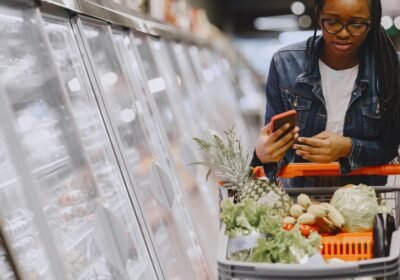
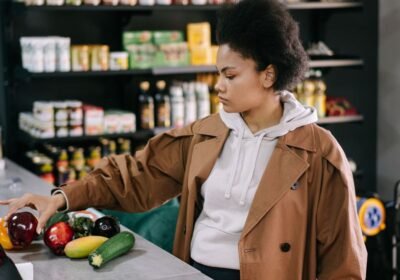
The forecast covers Tuesday, Nov. 24 through Monday, Nov. 30. Salesforce expects global online sales of $357 billion, up 6% from a year earlier, and U.S. online sales of $84 billion, also up 6%. It puts AI- and agent-influenced sales at $75.8 billion, up 13% from $67 billion in 2025. AI-driven traffic to retailer sites is forecast to rise 104% year over year, and AI-driven recommendations are expected to influence 1 in 5 holiday orders. Shoppers who arrive through AI referrals convert at twice the rate of typical e-commerce shoppers, according to Salesforce.
The company also reported what has already happened. Global online sales from Oct. 1 to Nov. 15 rose 5.5% from 2025, and U.S. sales rose 5%. Retailers’ discount rates in November are up 5% globally and 8% in the U.S., while average selling prices for physical goods are down 2% globally and down 1% in the U.S. Basket sizes are up 3% in both. Nearly 70% of shoppers say they are waiting for Cyber Week for big purchases.
Caila Schwartz, Head of Agentic Commerce Shopper Insights at Salesforce, said: “Consumers are turning to personal agents to discover gifts and find the best deals.”
What shoppers say about agents
The survey figures draw a gap between trying an agent and trusting one with a purchase. Of the shoppers Salesforce counted, 31% have tried a personal agent and 8% have had one make a purchase. Nearly 1 in 5 start their holiday journey with AI, and 74% trust AI recommendations. Another 11% say they will not buy if AI advises against it. Yet 73% are not ready to give a personal agent their credit card details.
That split matches what we reported on holiday shoppers using AI agents to research while few let them pay, and the permission pattern in United and eBay making AI shopping agents ask permission first.
Brand-owned agents fare differently in the same data. Salesforce says 39% of shoppers have used a brand’s shopper agent, 80% of them had a good experience and 75% felt more loyal. Shoppers who engage with a brand’s agent spend 8% more per order and buy 23% more items, and brands with shopper agents are growing sales 7 times faster than competitors without them. Salesforce expects 1 in 3 retailers to have a shopper agent by Cyber Week.
Sarah Wangaard, SVP, Marketing at Hibbett Sports, gave one example from a retailer. She said: “Hibbett AI, our Salesforce-powered shop agent, helps us do this at scale.” The release quotes her saying the agent “now handles 90% of core shopper journeys, guiding customers from product discovery all the way to purchase.”
How the numbers were built
The forecasts rest on Salesforce’s Shopping Index, which it says covers more than 1.5 billion global shoppers and 1.5 trillion page views. The data comes from Agentforce, Commerce Cloud, Service Cloud and Marketing Cloud, across more than 89 countries with a focus on 18 key markets, over the last nine quarters. Salesforce says its predictions blend first-party and third-party data with market assumptions, and that it applies several factors to extrapolate figures to the broader retail industry.
The $75.8 billion is a modeled estimate for the whole industry, extrapolated from data in Salesforce’s own products. The release describes the sales as “influenced by AI and agents,” a wider bucket than sales completed by an agent. The 8% of shoppers whose agent has made a purchase is the narrower figure.
Social and stores still carry volume
The release also reports social and store figures. Social media clicks account for 23% of e-commerce traffic, up 13% year over year, and social referral share of orders is up 27% across October and November. Some 16% of shoppers plan to shop inside social platforms, and more than 1 in 4 bought inside a social app in the past three months. In stores, 71% of shoppers plan holiday shopping, and 63% of Gen Z shoppers do. One in 3 Gen Z shoppers plans to visit a store for early-morning Black Friday promotions.
The most discounted categories globally are beauty and makeup at 38%, general apparel at 33% and beauty skincare at 30%. In the U.S. they are general apparel at 38%, health and beauty at 33% and home at 23%.
What it means for the marketing leader
A CMO reading this release has three measurement jobs before the week ends. The first is to tag traffic that arrives from AI referrals, so the 2x conversion claim can be tested against the brand’s own funnel. SparkToro’s panel work, which we covered in SparkToro’s ChatGPT panel finding that 6.9% of prompts research a brand to buy from, shows how small a share of prompts lead to a brand decision.
The second is to separate influenced sales from agent-completed sales in any board report. The third is to price the discount. With discount rates up and average selling prices down 2% globally, a sales lift that arrives with deeper markdowns says little about whether agents created new demand.
In our reading, the brand-agent figures deserve the closest look, because they are the ones a marketing team can act on. A retailer that adds a shopper agent changes its own conversion path, and the release reports higher spend per order and more items per order among shoppers who engaged with one. A team weighing that investment can run its own holdout test.
For the week itself, the practical checks are short. Confirm that AI referral sources are labeled in analytics. Compare conversion for those visitors with the typical shopper. Track markdown depth alongside revenue. Keep social and store promotions funded, since both still carry large shares of the holiday plan in Salesforce’s own numbers.
Source: Salesforce News