
DoorDash and Instacart announced on October 29 a definitive agreement under which DoorDash will acquire Instacart at $65.00 per share, an equity value of about $17 billion, and the combined company would run two of the larger commerce advertising businesses tied to grocery and local delivery.
The transaction is a long way from done. DoorDash expects it to close at the end of 2027 or in the first half of 2028, and until then the two companies operate as separate and independent businesses. That timeline matters for anyone with a 2027 retail media plan, because nothing about how Instacart sells ads or shares data changes on the day of the announcement. What the filings do show is how much advertising sits inside the target, how DoorDash talked to advertisers about it, and what the buyer still has to clear before it can combine the two.
What the two companies announced
The DoorDash announcement sets the price at $65.00 for each Instacart share, a 26% premium to Instacart’s closing price on October 22, 2026, the last trading day before media reports about a possible deal. The consideration will be at least 75% cash. Instacart stockholders can elect cash, DoorDash stock or a mix, subject to proration so that DoorDash stock does not exceed 25% of the total. Instacart’s board approved the agreement unanimously, and holders of about 19% of Instacart’s outstanding shares have agreed to vote in favor.

The release lists the conditions to closing: approval by Instacart stockholders, expiration or termination of the waiting period under the Hart-Scott-Rodino Antitrust Improvements Act, and other regulatory approvals including in Canada and Israel. DoorDash has a bridge loan commitment from JPMorgan Chase Bank for the debt portion, and the release says the transaction is not subject to a financing condition.
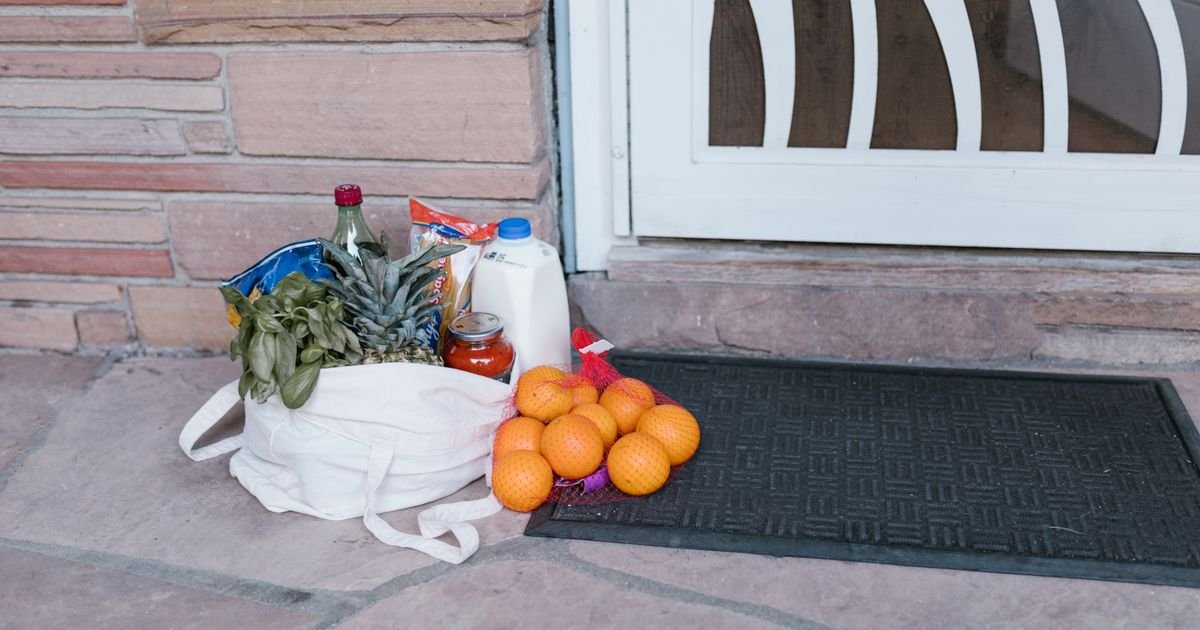
On the product side, DoorDash says it expects to keep Instacart’s brand, enterprise technology products and app after closing. It also made two commitments that bear on grocers who sell advertising: an open platform with no grocery exclusivity, so local grocers can work with any delivery platform they choose, and continued Instacart Shopper flexibility. The release says Instacart customers could shop at more than 50,000 additional stores on top of the nearly 100,000 stores on the Instacart platform today.
Both chief executives gave on-the-record statements. Tony Xu, co-founder and CEO of DoorDash, framed the grocery problem this way: “Grocery is one of the hardest things to get right online. Someone has to pick a ripe avocado, find a substitute you’d choose yourself, and get the ice cream to you before it melts.” Chris Rogers, CEO of Instacart, said “Over the last 14 years, Instacart has transformed online grocery by helping retailers of all sizes compete and grow, and joining forces with DoorDash allows us to do even more.”
How much advertising is inside Instacart
Instacart published its third-quarter results the same day, in an SEC exhibit that also carries the news of the sale. The figures a marketer would want are these:
- Gross transaction value (GTV) of $10,528 million, up 15% year over year, on 91.4 million orders, up 10%.
- Total revenue of $1,095 million, up 17%.
- Transaction revenue of $764 million, up 14%, or 7.3% of GTV.
- Advertising and other revenue of $331 million, up 23%, or 3.1% of GTV.
- GAAP net income of $147 million and adjusted EBITDA of $342 million.
Advertising and other revenue grew faster than GTV, orders, total revenue and transaction revenue. By our arithmetic from the release, it made up about 30% of total revenue in the quarter. The release does not split advertising from the “other” revenue in that line, so the 23% growth rate describes the combined figure and cannot be read as ad revenue alone.
Rogers described the company’s direction in the same release: “we’re building the operating system for grocery: one integrated platform that powers ecommerce, fulfillment, in-store, retail media, and AI Solutions.” Retail media is one of five named pillars in that sentence, and the numbers above show it is the one with the fastest growth rate among revenue lines.
Because of the agreement, Instacart cancelled its earnings conference call, which had been scheduled for November 5, 2026. It also suspended its financial guidance and withdrew its previously issued long-term guidance, which the release calls customary during a pending transaction. A buyer of Instacart media who wanted management’s view on ad growth in the fourth quarter will not get one from the company before the deal closes.
What DoorDash told advertisers
DoorDash reported its own results on October 29 in an SEC exhibit that includes a section on the acquisition. Total orders rose 28% year over year to 993 million, marketplace GOV rose 36% to $33.9 billion, revenue rose 34% to $4.6 billion, and net income attributable to common stockholders rose 91% to $466 million. The release says growth was 17% for orders, 23% for GOV and 23% for revenue when the Deliveroo acquisition is excluded. Instacart’s $1,095 million of quarterly revenue is roughly a quarter of DoorDash’s $4.6 billion.
The acquisition section talks to advertisers in one sentence: “the combined reach and cross selling opportunities across different categories will be a win for advertisers who are always seeking scaled platforms to earn the best return on ad spend.” The letter gives no advertising revenue figure for DoorDash, so the filings let a reader size Instacart’s ad line but not the buyer’s. The same section sets out a multi-year path to $500 million or more of annual synergies, net of investments, with more than 100% of total synergies reinvested in the first year after close and positive net synergies in year two and beyond.
The DoorDash announcement adds that “More grocers could deploy Instacart’s technology to run their own websites and retail media networks,” and that brands “would gain a scaled alternative for reaching customers online.” Those are the company’s stated intentions for after closing. They are also the two sentences a media planner can hold the company to in contract language.
The scale comparison with Amazon
Retail media buyers measure every network against Amazon, and Amazon’s third-quarter results release supplies the yardstick. It reports advertising services revenue of $19,637 million for the quarter, up 11% year over year, or 12% excluding foreign exchange, against $17,703 million in the third quarter of 2025. Amazon says Prime Day timing moved into the second quarter this year, and that it expects advertising revenue to grow in the high teens in the fourth quarter of 2026.
Set side by side, Instacart’s $331 million of advertising and other revenue is about 1.7% of Amazon’s advertising services line for the same quarter. The two lines are not defined the same way: Amazon’s covers sponsored ads, display and video advertising sold to sellers, vendors, publishers, authors and others, while Instacart’s includes an unspecified amount of other revenue. Even so, the gap shows that the combined DoorDash and Instacart business would be an alternative to Amazon for grocery categories rather than a rival at Amazon’s size. DoorDash itself describes the pitch to brands as a scaled alternative, which is a smaller claim than parity.
Our earlier report on Walmart Connect and other networks connecting to DV360 covers how retail media inventory is being pulled into programmatic buying. A DoorDash-owned Instacart would sit on the same map as those networks once it closes.
The pricing inquiry both companies received
One more document touches both companies. On October 28, the day before the deal, the Federal Trade Commission announced orders to nine airlines, ride-sharing companies, food-delivery firms and retailers, among them DoorDash and Instacart, asking for information on how personal data is used to set prices and worker compensation. The release says the orders were issued under Section 6(b) of the FTC Act, which gives the Commission authority to conduct wide-ranging studies that do not have a specific law enforcement purpose, and that recipients have 45 days to respond. FTC Chairman Andrew N. Ferguson said the agency intends to scrutinize the “opaque methodology that some companies in these industries may be using to determine how much consumers pay or how much gig workers are paid for the same product or service.”
The release asks about factors such as participation in loyalty programs. The orders are a study, and the document does not allege that any recipient has done anything. For a marketer the link is practical: the data that powers retail media targeting and the data that could be used for individualized prices often come from the same loyalty and purchase records, and a buyer evaluating a combined network may be asked by its own legal team how that data is handled.
What it means for the marketing leader
In our reading, three things follow from the documents, and none of them requires a change this quarter.
The first is contract timing. Close is at least a year away by DoorDash’s own estimate, so any Instacart or DoorDash advertising agreement signed in the next 12 months will run through the integration. Ask both sales teams whether a clause covers a change in ownership, a change in the data feeding audience segments, and a change in reporting definitions. DoorDash’s commitment to an open platform with no grocery exclusivity applies to grocers, and it says nothing about how the two ad businesses would price or package inventory together.
The second is measurement. Instacart’s reported line mixes advertising with other revenue, and DoorDash’s letter reports no ad figure. If your plan weights Instacart as a growing channel, ask for campaign-level results from your own account rather than leaning on a 23% growth rate that cannot be isolated to ads.
The third is concentration. Today a brand buying grocery media can compare Instacart against retailer networks and DoorDash separately. After closing, one seller would hold both. That raises the value of keeping a retailer-direct option live in the plan and of checking, before close, how much of your reach overlaps between the two apps. DoorDash says Instacart customers could shop at more than 50,000 additional stores, so some audience overlap is likely, though neither company has published a figure.
Our opinion desk makes a related argument in Get Neutrality Promises Into the Contract Before a Vendor Is Sold, which applies to any media vendor that changes hands during a plan year.
What to watch
Four items will show how the combined business takes shape. The Hart-Scott-Rodino waiting period and the Canadian and Israeli reviews are the formal gates. The Instacart stockholder vote is the next company event. DoorDash’s fourth-quarter report may say more about advertising than its third-quarter letter did, since the letter named advertisers as a beneficiary without a number. The last is the FTC study: responses are due within 45 days of receipt, and the Commission has not said when it will publish anything.
Source: DoorDash; Instacart Q3 2026 results (SEC)