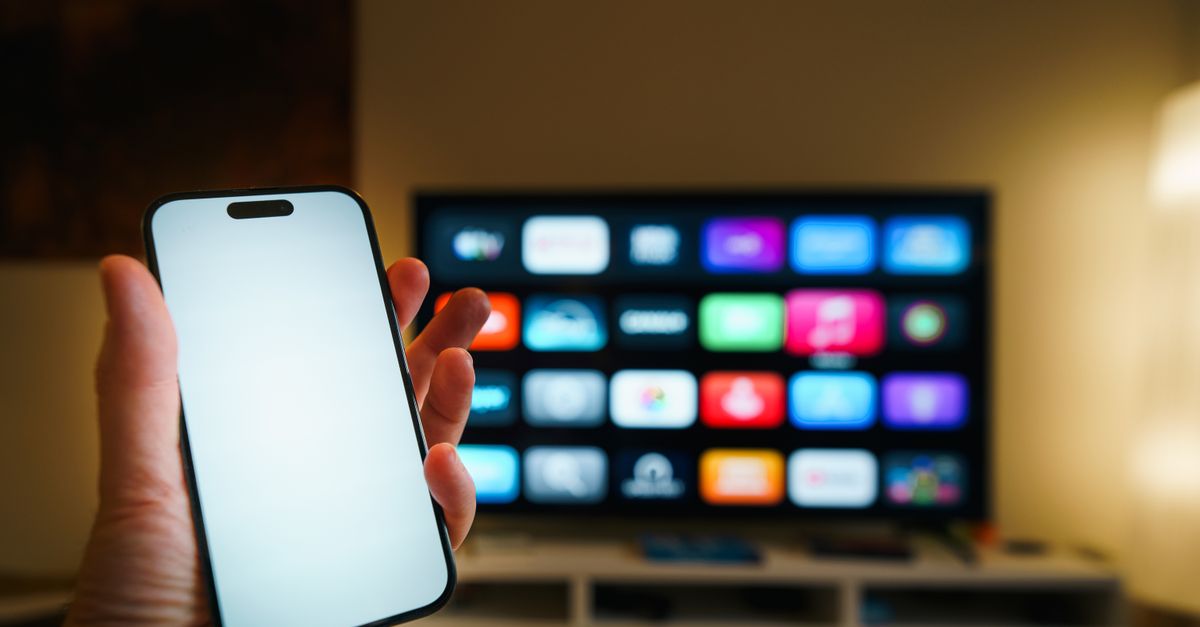
Connected TV’s home screen has been advertising’s most valuable piece of real estate and its least standardized. Every smart TV manufacturer built its own hero banner, its own tile sizes, its own click behavior, which meant a campaign that ran cleanly on one OEM had to be rebuilt from scratch for the next. That fragmentation is now getting resolved, and the shift says more about where programmatic advertising is heading than any single vendor’s product update.
The problem hiding in plain sight
Home screen inventory sits in the highest-attention spot on a connected TV: the first thing a viewer sees before choosing what to watch. Advertisers have wanted in for years. What kept the format from scaling was not demand, it was operational friction. Ad sizes, formats and click actions varied widely across original equipment manufacturers, so buyers and demand-side platforms could not treat home screen inventory as one addressable market. Each new OEM partnership meant a fresh set of specs, a fresh creative build and a fresh testing cycle.
What just changed
Nexxen, the advertising technology platform built around its own data and media stack, has introduced a standardized specification for its Nexxen TV Home Screen inventory across OEMs, unifying the request structure that demand-side platforms and buyers use to bid on the format programmatically. Advertisers now upload creative once, and AI-assisted resizing (drawing on dynamic creative optimization from Nexxen Studio, the company’s in-house creative team) reformats it automatically across whichever OEM system the campaign is running on.
“From the beginning, our goal with Nexxen TV Home Screen has been to transform the home screen from a fragmented media environment into a scalable, performance-driven channel for the industry,” said Kara Puccinelli, Chief Commercial Officer at Nexxen. “By standardizing these formats across OEMs, it’s another major step toward a more streamlined cross-platform ecosystem that better enables buyers, DSPs and brands alike.”
The company says the standardization has already cut onboarding time for new OEM partners by as much as 50%. Partners activating campaigns through the unified spec include The Trade Desk, Google Display & Video 360, StackAdapt, Basis, Brainlabs and H/L, with programmatic access extending across OEMs including V, TCL and TiVo Ads.
Why standardization is the real story
A single vendor unifying its own home screen spec is useful. What makes it industry-first news is what it signals about the maturity curve every high-attention CTV format eventually has to climb. Native ad formats inside a walled, manufacturer-specific environment cannot scale past a handful of large budgets willing to fund one-off custom builds. The moment a format gets a standardized request structure that multiple DSPs and agencies can plug into, it stops being a bespoke placement and starts being a buyable line item, the same evolution that turned early programmatic display and, more recently, CTV mid-roll inventory into scalable channels rather than boutique ones.
Home screen inventory has been the holdout. It carries premium attention (it is the first screen a viewer sees, full stop) but has lagged the rest of CTV precisely because of the fragmentation problem Nexxen is now addressing at the spec level. The exclusive home screen takeovers brands have been locking down one OEM at a time are themselves evidence of how much manual negotiation the format has required until now. Whether other DSPs and OEMs converge on Nexxen’s structure or route around it with their own competing standard, the direction of travel is now set: home screen inventory is moving from a manually negotiated placement to a programmatic one, following the same path that direct deals took when they moved natively into the ad server.
What it means for the marketing leader
For brands and agencies currently sitting out home screen inventory because the production overhead outweighed the reach, the calculus changes. A single creative upload that reformats across OEMs removes the main reason home screen campaigns stayed reserved for the biggest budgets. Marketing leaders evaluating CTV mix for the next planning cycle should treat home screen as a format worth testing rather than skipping, especially for campaigns already running through DSPs in the newly standardized partner list.
It also changes how CTV measurement and creative teams should plan production. Instead of building OEM-specific creative variants and validating each one separately, teams can standardize the creative brief around a single master asset and let the automated resizing layer handle the rest, freeing production budget for testing messaging rather than reformatting the same ad five different ways.
What to watch next
The open question is whether standardization stays vendor-specific or becomes a genuine cross-platform norm. Nexxen’s spec only standardizes activation through its own platform; it does not bind competing DSPs or OEMs to the same structure. Marketing and ad ops leaders should watch for whether The Trade Desk, DV360 and other major demand partners push for a shared, vendor-neutral home screen standard, the way display and video ad serving eventually converged on common IAB specs. Until that happens, buyers activating home screen campaigns across multiple platforms will still need to check whether their DSP of choice is inside the standardized set or still working the format manually, OEM by OEM.
There is also a measurement question that standardization does not automatically solve. A unified request structure makes it easier to buy home screen inventory across OEMs, but it does not by itself guarantee consistent viewability, attention or attribution reporting from one manufacturer’s environment to the next. Buyers moving budget into this newly standardized inventory should ask their DSP how measurement is normalized across OEMs before assuming a single creative upload also means a single, comparable performance number. The format’s biggest test is not whether it can scale activation, which this spec addresses directly, but whether it can scale trustworthy reporting alongside it.
For agencies managing CTV budgets across multiple clients, the practical shift is procurement, not just production. Media plans that previously treated each OEM’s home screen inventory as a separate line item with its own minimum spend and lead time can now be consolidated into a single programmatic buy, which changes how quickly a campaign can pivot budget toward whichever OEM is performing best mid-flight. That kind of flexibility has been standard in open-web display buying for years; CTV’s premium placements are only now catching up.
Source: Nexxen