The marketing platform wars have always been fought on two fronts: who controls content production and who controls distribution. This week, evidence arrived from both simultaneously, and it points to the same conclusion: AI is becoming the infrastructure underneath both.
The Production Stack Is Going AI-Native
At Cannes Lions this week, L’Oréal Chief Digital and Marketing Officer Asmita Dubey disclosed performance numbers from CreAItech, the company’s in-house AI-powered content production system. The results are specific and striking.
CreAItech has reduced content production costs by 40 percent since rollout last year, while generating 50,000 marketing assets in its first year of meaningful deployment. The system already draws on models from Seedance, Google (Gemini, Veo3, Imagen), Adobe, and Stable Diffusion. L’Oréal’s new OpenAI agreement adds image generation to that roster, extending CreAItech’s model-mixing approach into a wider set of capabilities.
The broader deal includes two other dimensions. Maybelline’s virtual try-on app will integrate directly into ChatGPT. L’Oréal will provide product information to OpenAI for inclusion in ChatGPT responses. These extensions turn CreAItech from a production tool into a distribution surface.
The scale of what L’Oréal has built is worth pausing on. The company trained 70,000 employees on CreAItech in its first year of broad deployment. Its marketing organization manages roughly 500,000 creator partnerships annually. L’Oréal spent approximately 1.98 billion euros on technology in 2025 and grew advertising spend 10 percent year-over-year to 15.48 billion dollars. When a company at this scale reports a 40 percent production cost reduction, it signals a structural outcome, not a pilot result.
Multi-Model Orchestration as the Real Competency
What CreAItech demonstrates is that the winning enterprise AI content strategy is not about picking one model. L’Oréal layers multiple foundation models across different asset types, letting the best available model handle each production task. Adding OpenAI to an existing stack of Google, Adobe, and Stability AI models is not expansion for its own sake. It is the result of a deliberate architecture built around best-in-class outputs by category.
This matters because it shifts the competitive question. The strategic variable is no longer which AI vendor you use. It is whether you have built the orchestration layer that can use all of them well, at the speed and volume your brand requires.
The Distribution Stack Is Catching Up
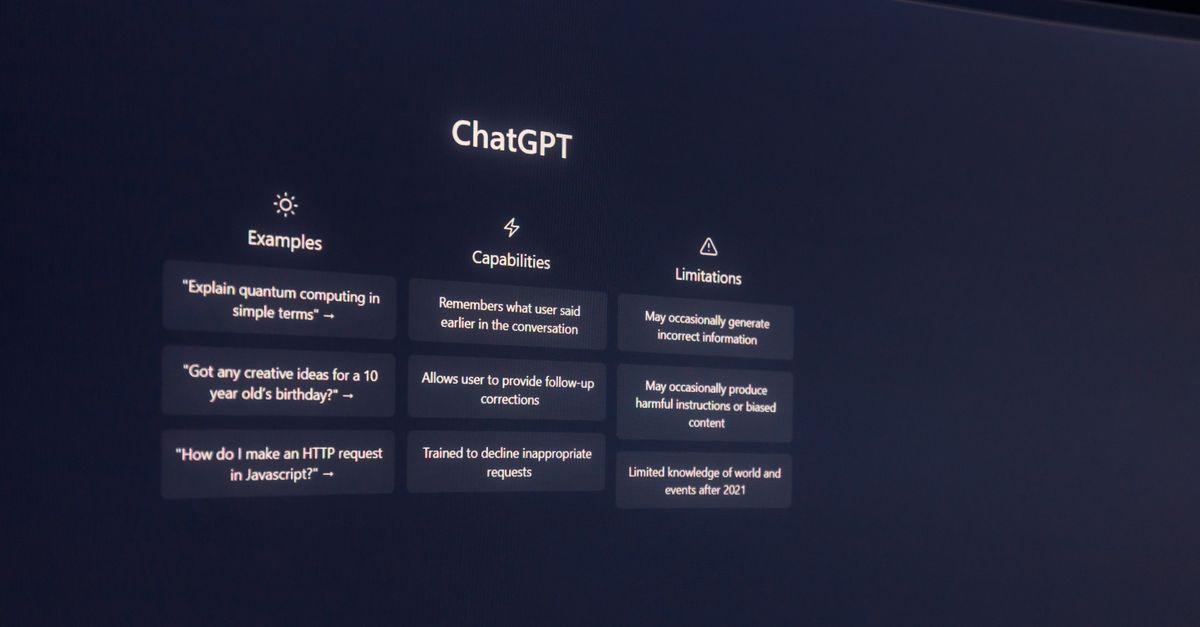
On the same week L’Oréal was disclosing production metrics at Cannes, OpenAI made its self-serve advertising manager available in the United Kingdom, its fifth market. The company’s global head of ads, Dave Dugan, is at Cannes pitching the expanded offering to agencies and brands.
The speed of OpenAI’s international rollout is notable. Six weeks elapsed between U.S. wide availability and the U.K. beta launch. The platform has also added cost-per-click bidding alongside its existing CPM model, with additional bidding mechanics signaled for the future. Self-serve access means smaller brands can now buy without going through a direct sales process.
The sequencing reveals OpenAI’s tactical logic: build infrastructure scale first, establish a self-serve model that reduces sales burden, and let market presence create gravity before solving harder format and measurement questions. As commentary from Enders Analysis noted, the priority is “building infrastructure scale first, leaving the trickier questions over model and format for later.”
When the Production Tool Becomes the Channel
The L’Oréal deal illustrates something important. L’Oréal is not just partnering with OpenAI to produce assets faster. It is also partnering to appear inside the product that is becoming an ad channel. Maybelline appearing in ChatGPT, and L’Oréal product data feeding OpenAI’s responses, means the brand is embedding into the retrieval layer, not just the creative layer.
This is a different model than banner advertising, and a different model than search. It is closer to what brand managers call earned presence in traditional media, but engineered at scale through data agreements with AI platform partners. It is also connected to broader shifts this publication has tracked: from AI search visibility becoming a paid budget line to agentic media buying moving from experimentation to governance. The common thread is that AI is collapsing the boundary between content, search, and commerce into a single managed surface.
What This Means for the Marketing Leader
Two shifts are happening in parallel, and they are connected. First, the content production stack is consolidating around AI orchestration platforms, with cost compression replacing headcount arguments as the primary ROI metric. Second, the distribution stack is adding new inventory that is AI-native and operates on different pricing and measurement logic than traditional programmatic.
For marketing leaders, the practical implication is this: the agency-dependent model of content production at scale is losing its cost defensibility. When a company with a 15 billion dollar advertising budget reports a 40 percent cost reduction on AI-generated assets, the conversation in the next planning cycle will not be about whether to use AI content tools. It will be about which orchestration layer to build on, and how to maintain brand quality at velocity.
On the distribution side, the arrival of self-serve AI platform advertising from OpenAI means a new inventory category requires evaluation. These placements operate on different inventory logic than social or search. Understanding how your brand appears in AI responses is a measurement problem that does not yet have standardized solutions, but the budget conversation is already beginning.
Brands that treat AI platforms as just another placement will find themselves in a commoditized auction. Brands that negotiate data and integration partnerships now are building a qualitatively different kind of presence, one that functions more like owned media than paid placement.
Source: L’Oreal and OpenAI; OpenAI: New Ways to Buy ChatGPT Ads