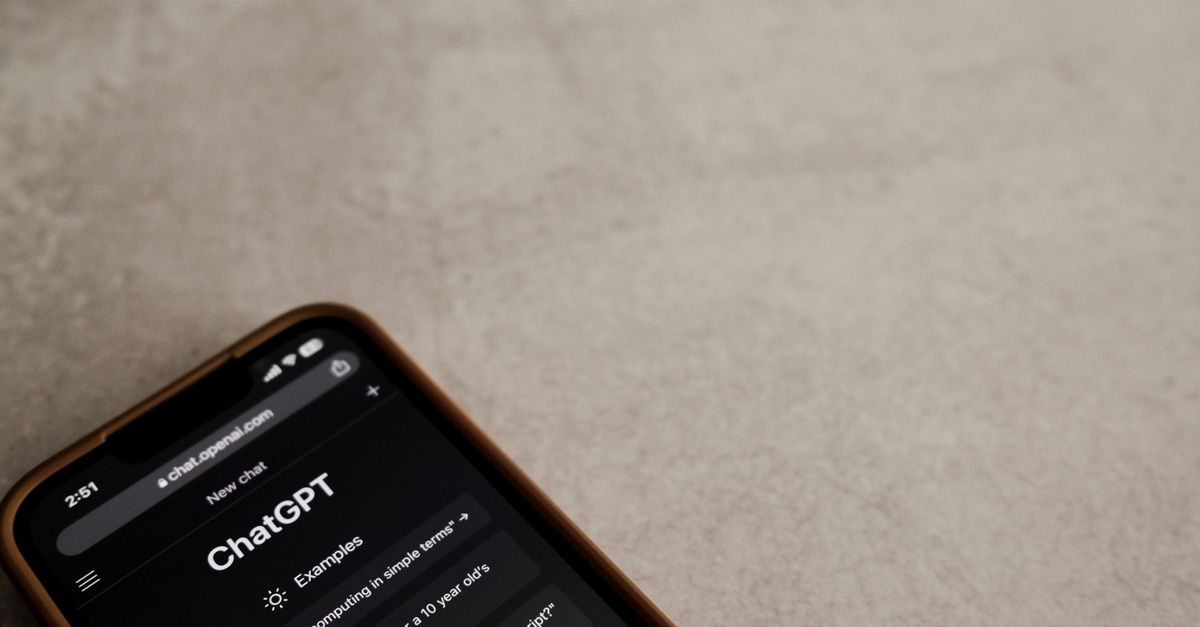
Four trade outlets covered the same shift this week from four different angles: advertising is moving from something a user clicks through to something a user chats with. Line up Digiday, Marketing Dive and AdExchanger’s reporting side by side and a pattern emerges that none of the individual stories states outright: the “AI-native” ad format everyone is describing as the next evolution of digital advertising is, for now, a narrow lane open mainly to platforms and brands large enough to treat a six-figure test budget as a rounding error.
The Point of Agreement: This Is a New Unit, Not a New Coat of Paint
Digiday’s report on OpenAI’s newest ad format described a “click to chat” unit that keeps a user inside ChatGPT and opens a conversation with a brand’s AI agent instead of sending that user to an external site. OpenAI CFO Sarah Friar told the outlet the ads currently running beneath ChatGPT responses are a “basic starting point” and that the company is working toward something “truly endemic to AI.” Wayfair’s director of paid media, Morgan Brown, confirmed to Digiday that the retailer is in OpenAI’s Sponsored Agent pilot to test exactly that kind of conversational unit.
Marketing Dive’s explainer on the parallel Amazon Ads and OpenAI partnership landed on the same basic read: this is a genuinely new placement, not a repackaged banner. Its account details how Amazon’s demand-side platform now lets advertisers buy ChatGPT inventory on a cost-per-click or cost-per-thousand-impressions basis, with product feeds auto-generating creative from a retailer’s catalog. Delta Vacations president Katrin Koenig is the outlet’s example of an early adopter, framing it as a natural extension of how “travel planning is becoming increasingly personalized.”
On that much, the coverage agrees: a chat window is becoming an ad surface with its own mechanics, distinct from either search or social. Marketing Dive’s account puts a scale number on the underlying business, reporting that ChatGPT’s ads have already reached a $1 billion annualized revenue run rate with tens of thousands of advertisers participating globally, which is the figure that makes OpenAI’s push to formalize a signature ad unit look less like an experiment and more like a business line it now needs to defend and grow. Where the accounts diverge is on how far that surface has actually opened to advertisers beyond the earliest movers.
Where the Coverage Splits: Who Is Actually Buying In
Digiday’s second piece this week, on Amazon extending its “supply-chasing streak” into ChatGPT, treats the buy-in as momentum: over the past 18 months Amazon has struck similar first-mover supply deals with Netflix, Roku, Spotify, SiriusXM, Disney, Hulu and ESPN, and ChatGPT is presented as simply the next line in that streak, building on the DSP lane into ChatGPT this pub covered when it opened. Chris Conetta, director of omnichannel supply at Amazon DSP, said in the partnership announcement that “conversational ads represent the fastest growing engagement opportunity for brands to reach new and existing audiences,” a framing that, read alongside Digiday’s account, sounds like confirmation the category is arriving on schedule.
AdExchanger’s reporting the same week tells a less settled story. Its account of testing ChatGPT’s own ad delivery found that most of the brands OpenAI approached about the format simply said no, citing a $200,000 minimum commitment and roughly $60 CPMs with no comparative chatbot-advertising data to justify the spend. The named early advertisers it could find, beyond Amazon’s own DSP partners, are a short list: Target, Ford, Mrs. Meyer’s and Adobe, tested mainly through the big holding companies, WPP Media, Omnicom and Dentsu, rather than independent mid-market brands. In an added wrinkle AdExchanger’s reporter documented directly, ChatGPT itself gave an incorrect answer about where its own ads appear, initially claiming they showed only on mobile; OpenAI confirmed to the outlet that this was “entirely untrue.”
That is the disagreement worth naming: Digiday and Marketing Dive describe a format that is opening up, evidenced by Amazon’s DSP integration and named pilot partners. AdExchanger’s on-the-ground reporting describes a format that most invited advertisers are still declining, at a price only a handful of platform-scale buyers can justify. Both are accurate. They are simply describing two different populations, the ones buying in and the much larger group that was asked and said no.
Why the Money in the Room Is So Concentrated
The reason those two readings coexist comes down to who can afford to treat an unproven ad unit as a research cost rather than a media buy. Amazon’s DSP does not need ChatGPT inventory to already be measurable in the way a display exchange is; it needs to be first in line whenever new premium supply appears, because scarcity, not proof, is what it has been buying across Netflix, Roku, Disney and now OpenAI. A brand paying its own $200,000 minimum has no such luxury: it is buying into a format where, as AdExchanger’s reporting shows, even the platform itself cannot yet reliably describe how its own ads are being delivered.
That gap between platform-scale conviction and individual-advertiser hesitation is the part no single story states directly, because each outlet was reporting on one side of it. Read together, they describe a market in an unusually honest holding pattern: real product, real early spend, and a price and measurement gap wide enough that most of the audience being pitched has decided to wait it out.
The identity of who is testing reinforces the point. AdExchanger’s reporting notes that the holding companies running early ChatGPT ad trials, WPP Media, Omnicom and Dentsu, are doing so on behalf of clients rather than committing their own budgets outright, which is a different posture than a brand signing a direct deal because the numbers already work. A holdco running a contained pilot for a client is managing downside risk on someone else’s spend; that is not the same signal as a category proving itself. It is the posture an industry takes toward a format it expects to matter eventually, not one it has already priced correctly today.
What This Means for the Marketing Leader
For a marketing leader deciding whether “AI-native advertising” belongs in a 2026 test budget, and whether to sign off on the kind of spend this category currently requires, the coverage collectively argues for treating this as a category to watch rather than one to buy into yet, with three concrete signals worth tracking before that changes. First, minimum spend: AdExchanger’s reporting puts the current floor at $200,000, a level built for holding-company test budgets, not a mid-market marketing team; watch for that minimum to drop the way early programmatic and early TikTok ad minimums eventually did. Second, independent measurement: right now, performance data comes from the platform itself, the same platform whose own product gave a wrong answer about where its ads run; a third-party measurement partner entering the space, the way MRC or comparable bodies did for programmatic display, would be the signal that this is no longer a closed loop. Third, watch who else besides Amazon shows up on the demand side, since the Adform-led European rollout of the same ad units is so far the only sign of a second DSP treating this as more than a supply-chasing line item. A single dominant DSP is not the same signal as a second, unrelated platform deciding the economics already work.
Until those three things move, the honest read of this week’s coverage is that ChatGPT advertising is real, it is growing, and it is currently priced and measured for an audience of one kind of buyer: the one that does not need to see the math work before it commits.
Source: Amazon Ads