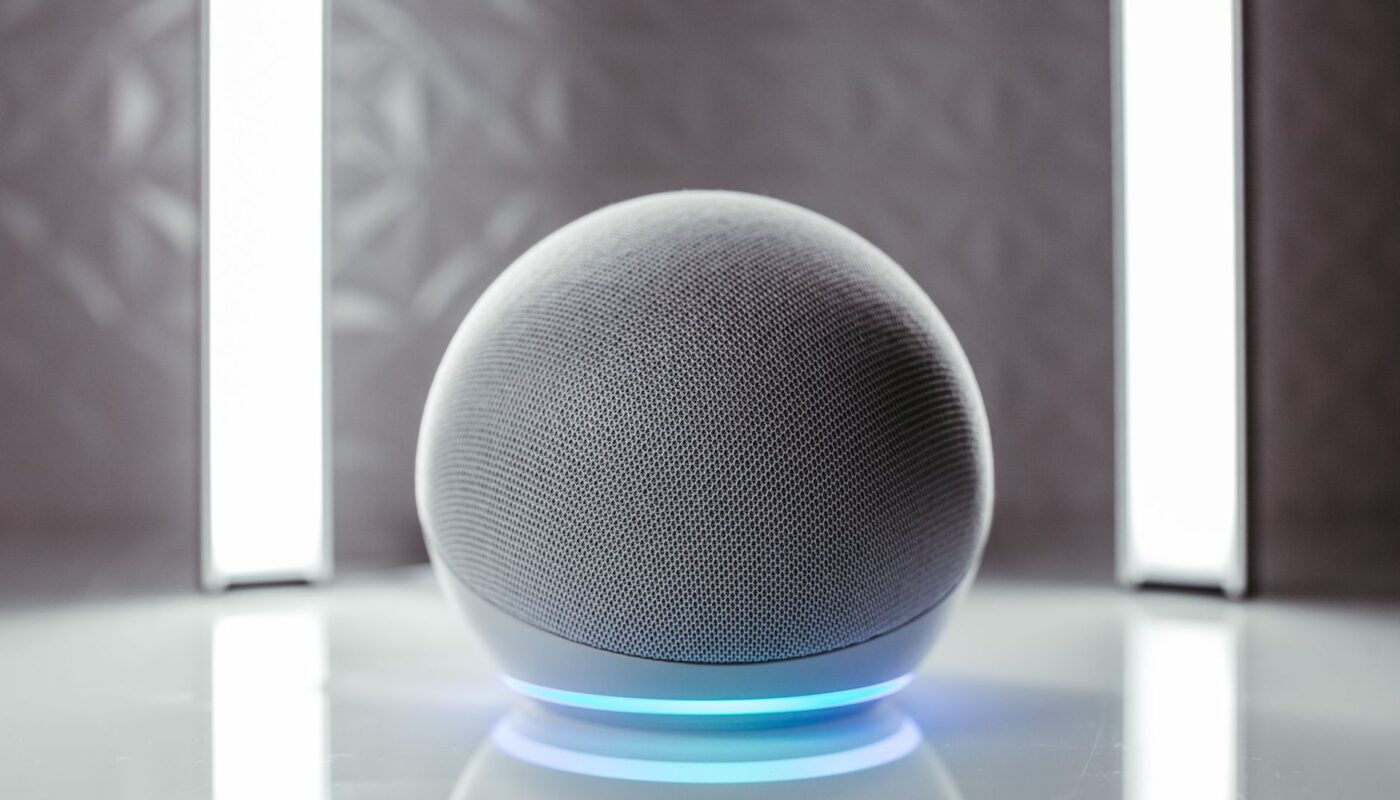
The advertising industry has spent two decades optimizing for the click. Banner ads, search ads, social formats, connected TV pre-rolls: every format relies on a visible creative and a human decision to engage. Voice AI is rewriting that assumption. When an AI assistant can complete a purchase on a user’s behalf without any screen interaction, the entire concept of an ad format changes.
Amazon made that shift concrete in June 2026 when it unveiled agentic advertising capabilities for Alexa+. The new feature allows brands to run sponsored placements inside voice AI responses, with Alexa+ able to complete transactions autonomously based on user preferences and prior behavior. It is the first major commercial deployment of agentic ads by a platform with a consumer install base at scale. Full details are available in Amazon Advertising’s announcement.
How the Format Works
Alexa+’s agentic ad system integrates sponsored product placements into the AI’s conversational responses. When a user asks Alexa+ to reorder household supplies or find a gift for a specific occasion, the AI can surface a sponsored product alongside organic results and, with prior user authorization, complete the purchase without additional confirmation steps.
Amazon describes the offering as “intent-matched.” Unlike keyword-targeted search ads, Alexa+’s agentic system infers purchase intent from the full conversational context, not from a single query string. A user discussing a camping trip across multiple turns might see sponsored outdoor gear surface in a later session without explicitly searching for it.
The company plans to offer advertisers access through Amazon Advertising’s managed service initially, with self-serve access expected to follow. Targeting parameters will include behavioral signals from Amazon’s first-party purchase data, Prime membership tier, and Alexa+ usage patterns.
Why This Is Different From Prior Voice Ad Experiments
Voice advertising has been attempted before, and almost uniformly without success. Early experiments with audio ads inserted into Alexa Skills in 2018 and 2019 drew user backlash and were quietly discontinued. The core problem was format: audio ads felt intrusive in a conversational interface, and there was no purchase mechanism attached.
Agentic ads solve both problems. The placement is embedded in an AI-generated response rather than interrupting it, and the conversion mechanism is native to the interaction. The user does not hear a traditional ad; they receive a recommendation the AI can act on immediately.
The distinction matters for measurement. Traditional voice ad experiments struggled to connect exposure to outcome. Agentic ads by design connect the recommendation to a closed-loop purchase event, giving advertisers the attribution signal that audio formats could never produce.
Implications for Brand Strategy and Media Planning
Marketers will need to rethink creative strategy for an environment where there is no visual creative unit. In a voice-first agentic channel, the product description, the review language, and the catalog metadata become the ad. Brands that have invested in structured product data and Amazon’s Brand Registry are better positioned than those that have not.
Media planning assumptions shift as well. Share of voice in a conversational AI response is not governed by the auction dynamics of a display exchange. It is governed by relevance scoring, AI-inferred intent, and platform-defined inventory rules. Brands accustomed to bid-based control will be operating in a less transparent environment.
The advertiser disclosure question remains open. Amazon has indicated that agentic ad placements will be labeled, but the format and prominence of that disclosure in a voice response are not yet specified. Industry standards bodies including the Interactive Advertising Bureau have not yet addressed agentic ad disclosure requirements.
The Broader Agentic Advertising Trajectory
Amazon is not the only platform developing agentic commerce capabilities. Google’s Project Astra has demonstrated multi-turn task completion with purchase capability. Meta has embedded commerce tools in its AI assistant across WhatsApp and Instagram. Microsoft’s Copilot integration with retailer catalogs is active in several markets.
The common thread is that AI assistants are moving from information retrieval toward transaction completion. Each platform carries a different first-party data advantage: Amazon has purchase history, Google has search intent, Meta has social graph signals. The advertiser that figures out how to run coordinated campaigns across all three without conflicting brand signals will have a meaningful edge.
Programmatic buyers will need new pipes. Standard DSP infrastructure does not connect to conversational AI inventory. The first generation of demand-side integrations for agentic channels is being built now, and the governance questions around this category are still early, as covered in the earlier analysis of WPP, Yahoo DSP, and the emerging agentic buying stack.
What Advertisers Should Do Now
The immediate priority for brands selling on Amazon is catalog hygiene. Product titles, descriptions, and attributes that Alexa+ references when generating recommendations need to be accurate, complete, and optimized for conversational retrieval rather than keyword matching alone.
The medium-term priority is measurement readiness. Amazon will offer agentic ad attribution through its existing advertising console, but marketers should define their own incrementality framework before the format scales. Early adopters who establish baselines now will have better data when the format becomes competitive.
The longer-term question is whether agentic advertising becomes a walled garden or a standards-based ecosystem. If Amazon, Google, and Meta each build proprietary agentic ad systems with no cross-platform standards, the industry will face the same fragmentation problem that complicates programmatic buying today, without the benefit of a decade of interoperability work.
Amazon’s Alexa+ agentic ads are a beginning, not a finished architecture. But they are also a clear signal that voice AI is no longer a speculative advertising surface. The commerce layer is live.