Retail media networks spent years proving they could measure digital clicks. The new frontier is connecting that same first-party shopper data to premium video, where the measurement gap has remained wide and the ad dollars have not followed. Target’s Roundel and DirecTV Advertising announced a measurement partnership at Cannes Lions 2026 that shows what closing that gap requires.
The Attribution Gap That Has Defined Premium Video’s Ceiling
Premium video, particularly live sports and linear television, commands audiences that digital performance channels cannot replicate. Live sports broadcasts remain among the few programming categories where viewers watch in real time and at scale. But for retail advertisers optimizing on return, that reach has been difficult to connect to purchase behavior. The tools that made digital advertising measurable, attribution pixels, last-click models, and on-platform conversion tracking, do not translate to a household watching a baseball game.
That gap matters because retail media has matured on the strength of its data advantage. Roundel, Target’s retail media network, generated $246 million in advertising revenue in Q1 2026, a 51 percent increase year over year. That growth was built on a clear value proposition: Target’s first-party shopper data lets brands see whether the people who saw an ad actually bought the product. The proposition works well on digital surfaces. The question has been whether it can extend into premium video at all.
What the Roundel and DirecTV Partnership Does
The measurement solution connects DirecTV’s audience signal to Target’s purchase data. An advertiser running a campaign across DirecTV’s premium video inventory, including live sports on MLB, WNBA, and PGA broadcasts, can see whether exposed viewers subsequently purchased at Target stores or through Target’s digital channels. The closed-loop attribution model exports the same logic that made retail media compelling in digital performance contexts into an upper-funnel, high-reach environment.
Where the Ads Run and Why the Surfaces Matter
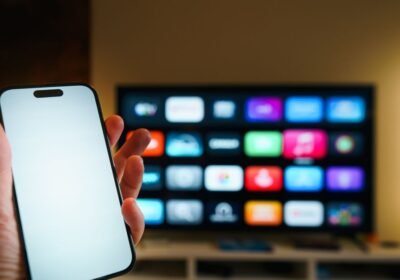
The partnership covers multiple DirecTV ad surfaces. Live sports broadcasts are the flagship placement, combining professional sports audiences with DirecTV’s subscriber reach. Also included are DirecTV home screen inventory and pause ads, the units that appear when viewers pause live content. Pause ads capture a high-attention moment: a viewer who has actively interrupted their experience is more likely to process an adjacent message than one watching a continuous stream.
DirecTV Remote, the company’s out-of-home network covering screens in planes, hotels, bars, and travel locations, extends the measurement question beyond the living room. Danone, testing the solution with its Dannon and Oikos yogurt brands, is the first advertiser to run through the joint offering. The test spans this full range of DirecTV surfaces, which means the resulting data will show attribution across the widest possible version of the partnership’s inventory.
The Significance of the Cannes Announcement
Matt Drzewicki, Roundel’s SVP, described the intent as connecting “Target’s guest insights with premium video environments” to “help brands engage guests during key moments of discovery and inspiration.” That framing, discovery and inspiration, is the language of upper-funnel measurement, a domain retail media has not historically occupied. Retail media networks were built on performance: they knew who bought what, and they could prove a campaign drove a purchase. The discovery and inspiration layer was always handled somewhere else in the plan, usually in brand channels that could not prove their own impact.
The shift matters because media investment decisions are increasingly consolidated. Brand budgets and performance budgets used to run through separate planning cycles with separate measurement standards. The consolidation of both into single-platform retail media plans requires retail networks to support upper-funnel investment with the same closed-loop data they use for performance. The Roundel and DirecTV partnership is a direct response to that consolidation pressure.
What This Means for the Marketing Leader
Retail media is no longer only a conversion channel. The networks with the strongest first-party data assets are building measurement infrastructure to compete for the full media plan, not just the lower funnel. That changes how marketing leaders should evaluate retail media partners: the relevant question is not only which network has the most relevant shopper data, but which has the distribution relationships to make that data useful across the widest range of media environments.
Premium video, live sports in particular, represents a category where audience attention is demonstrably high and measurement has historically been weak. The combination of DirecTV’s live sports inventory with Roundel’s purchase data creates a proof-of-concept for closed-loop premium video measurement. If the Danone test produces attributable purchase lift data, it validates a model that every major CPG brand running retail media programs will want to evaluate.
What to Watch as the Pilot Develops
The measurement partnership is a pilot, and its significance depends on what the Danone test produces. The key questions: does the model generate purchase lift data that is distinct from what Roundel’s digital campaigns already show, or does it largely confirm that premium video audiences over-index for Target shoppers in ways that were already captured elsewhere? The former validates the investment; the latter raises questions about true incrementality.
For marketing leaders building or renegotiating retail media partnerships, the Roundel and DirecTV announcement is a signal to audit which networks are investing in premium video distribution agreements versus which are staying in their digital lanes. The data advantage in retail media is now table stakes. The emerging differentiator is where that data can be activated, and whether the measurement model travels with it.
Source: Target (Roundel)Related: retail media vertical integration reaching streaming TV | Albertsons embedding sponsored products into AI-powered search