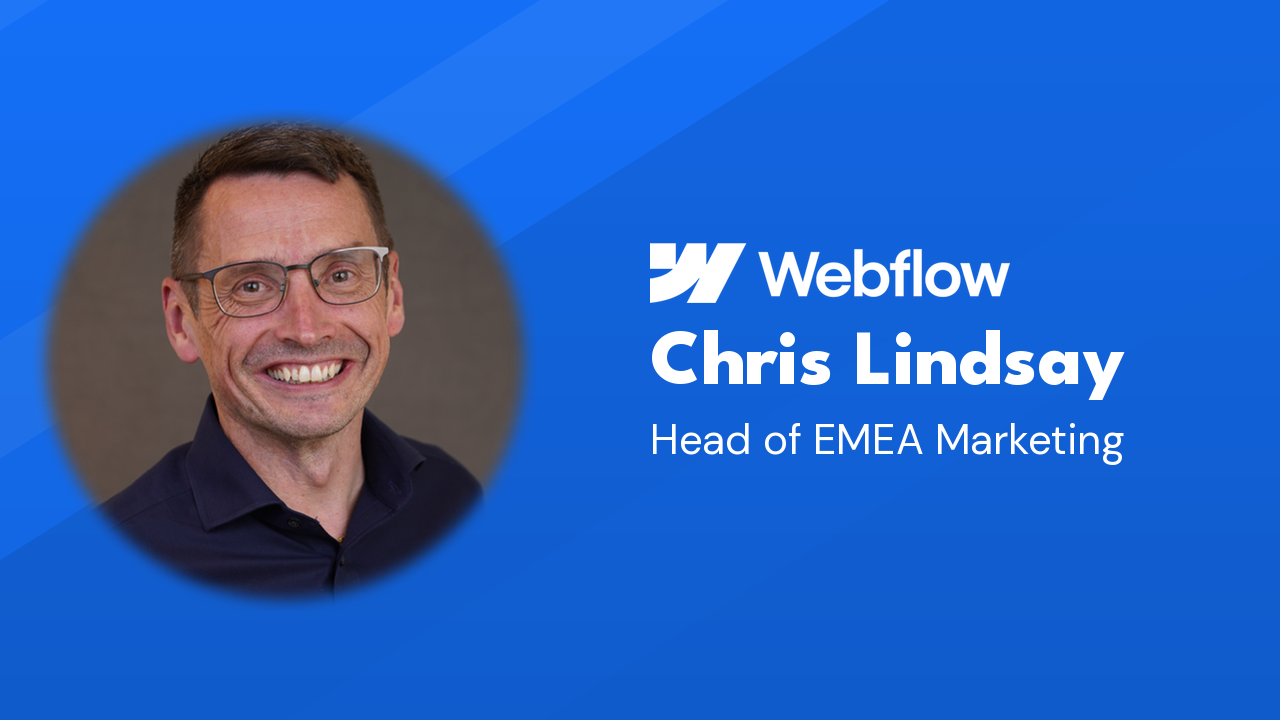
Chris Lindsay is Head of EMEA Marketing at Webflow and is speaking at The MarTech Summit London on 10 and 11 November. MarTech Edition sent him five questions about AI agents working on live websites, and he answered them in writing.
More than 30% of Webflow’s enterprise customers build on MCP. What are they letting agents do on live sites today?
Increasingly, the whole build and maintenance loop. In the last few months alone, agents connected through MCP have gained the ability to create native interactions, query and update the CMS at scale, deploy and debug apps on Webflow Cloud, and read site performance, experiment results and AI crawler activity. They already build layouts, components and variables. The pace is the story. The list of supported operations expands release by release, and across our enterprise customers MCP adoption is up almost 3x since April. What stays constant is the operating model. Agents build inside the existing design system, on branches, under the same roles and permissions as people, with every action logged. Teams can now watch an agent work live on the canvas. They hand over the repetitive work and keep the decision to publish.
Which MCP governance control do customers switch on first, and why?
I’d point to Agent Instructions first, then roles and permissions. Many teams were already keeping markdown files of brand and voice rules for their agents. Agent Instructions put those rules inside Webflow, so any agent that connects reads the same guidance. You can now have an agent analyse your existing site and draft those guidelines for your team to review and approve, which lowers the barrier further. Permissions come next because they limit the blast radius: an agent can be restricted to one collection, page or locale. Branches, single-page publishing and the activity log tend to follow once agents are doing real work. As agents can do more, the controls matter more, and the two are growing together.
When an agent publishes something off-brand, how does a team find out and roll it back?
The aim is to catch it before it’s live. Agents work on isolated branches, so a person reviews the change first, and single-page publishing means one page can ship without republishing the whole site. While an agent works, you can watch it on the canvas the way you’d see a teammate. If something does slip through, the activity log shows when a change was made, who or what triggered it, and what it touched, so it’s quick to trace. Then you fix the cause, usually by tightening the agent instructions so it doesn’t happen again. Prevention matters more than the clean-up: the teams that make this work treat the agent as if it’s a new hire and give it a clear brief, rather than treating it as an unsupervised contractor.
How are EMEA marketing teams adopting agent-built web work compared with US teams?
We’re not seeing a significant difference between EMEA and the US. In both territories, some customers are at the cutting edge. They’re hungry for the speed that AI and agents give them, because it increases team capacity and throughput without adding headcount. At the other extreme, some customers are very cautious, and that’s true on both sides of the Atlantic too. Where I do see a pattern in EMEA, anecdotally, is that teams ask governance questions first. They manage many languages, markets and regulations alongside brand consistency, so rollouts tend to start narrower and widen later. That’s a sensible way to adopt agents, and I expect it to hold up well as the technology matures.
What do you expect marketers at the summit to ask about AI agents on their websites, and what will you tell them?
I expect three questions. What should I be doing about agents, and why? Where do I start? And am I behind? Every marketing team carries a number, and agents can help you carry it. The mindset is speed and agility, with governance. Launch faster: campaigns, products and new markets. Convert more: experiment at scale and improve the return on the paid media and traffic you’re already driving. Get known, to agents and humans: do the basics really well, and it will put you ahead of almost everyone. To start, pick one workflow tied to one of those goals. Write your brand rules down, limit what an agent can touch, and keep a person approving what goes live. Then widen it. And no, you’re not behind or alone. Most marketing teams I speak to are working this out in real time, and nobody has it settled yet.