This is sponsored content. The MarTech Edition newsroom did not produce this article.
DoorDash now reaches 42 million monthly active consumers. That audience spans its core delivery business, convenience and grocery verticals, and its DashPass subscription program. Through its acquisition of ad-tech platform Symbiosys, the company has built a DoorDash commerce media offering. It extends well beyond on-platform sponsored listings — into search, social, and display channels where those consumers spend the rest of their time.
DoorDash calls this “retail media 2.0.” In short, retail media is no longer just a single retailer’s owned ad inventory. Instead, it functions as a unified commercial operating system. That system merges advertising, commerce intelligence, payment data, and loyalty signals. Together, they find buyers wherever those buyers are — not only on the retailer’s website.
How DoorDash Commerce Media Works for Brand Partners
The DoorDash commerce media model introduces three changes from the old retail-media approach.
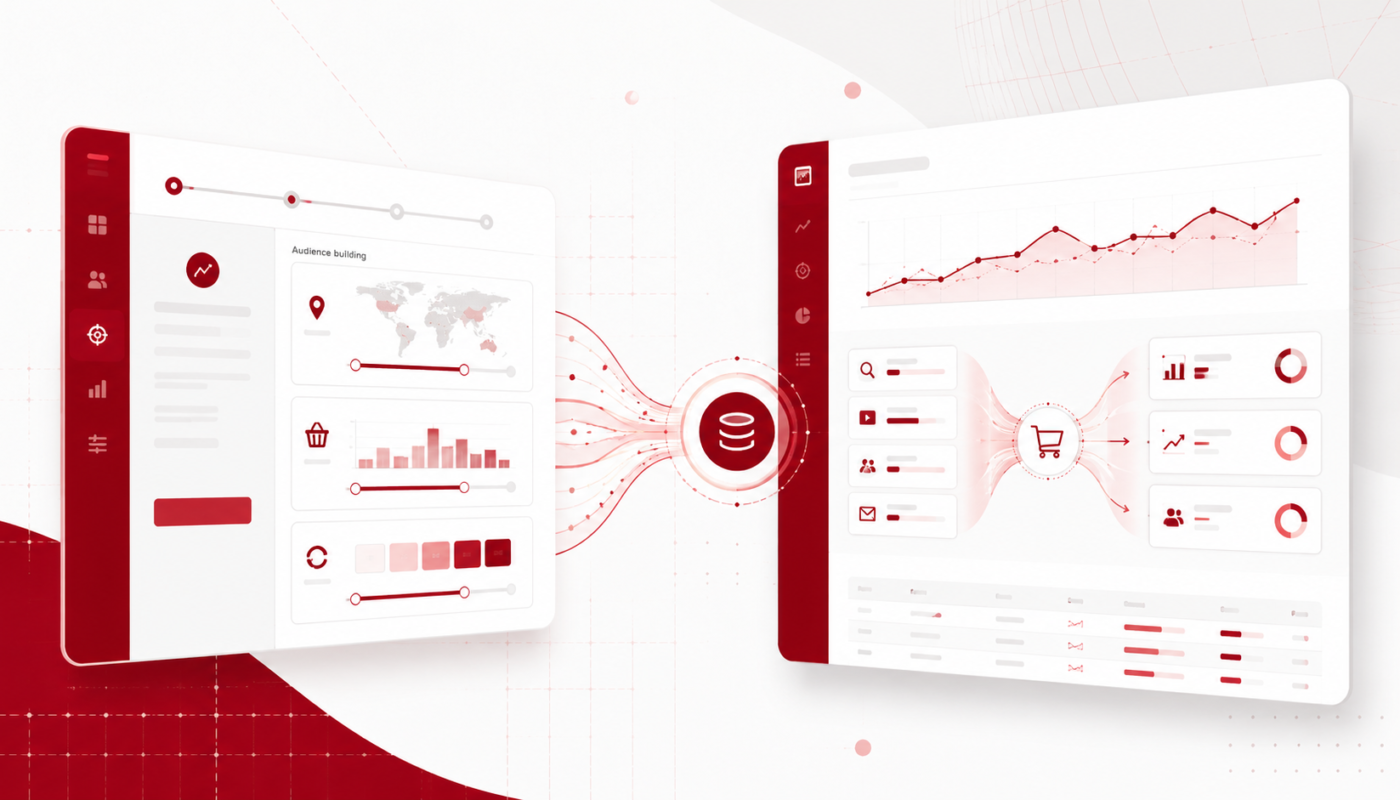
First, brands buy outcomes against DoorDash’s first-party commerce signal — not impressions against owned inventory. Specifically, the first-party data becomes the audience for off-platform campaigns. That data includes purchase history, basket composition, frequency, and geography. This shift connects to a broader industry pressure: cookieless attribution now forces new measurement models across the market. Additionally, it aligns with how privacy-first identity solutions now gain traction as marketers move past cookie deprecation.
Second, measurement closes back to DoorDash purchase behavior — even when the campaign ran on Meta or Google Search. Consequently, the closed loop that retail media built its reputation on now operates across a much wider canvas.
Third, DoorDash unifies the campaign-management tooling. Brand teams no longer run separate workflows for on-platform and off-platform spend. As a result, this mirrors what CDP consolidation now drives across the broader martech stack.
Why Retail Media 2.0 Changes the Measurement Model
The measurement shift is the most consequential part. Historically, marketers measured off-platform campaigns against proxy signals — clicks, view-through, modelled attribution. By contrast, the DoorDash approach closes that loop back to actual purchase behavior on the platform.
That is a meaningful upgrade for CPG advertisers. Furthermore, it raises the bar for every other RMN that competes for the same brand budgets. AI agents now reshape marketing operations across platforms. Brands that benefit most are those whose measurement infrastructure can support that shift. For revenue leaders tracking where AI actually delivers, 35 CROs share what they extract from AI in revenue operations — and the gap between promise and production remains wide.
The Competitive Context: Where DoorDash Sits in the RMN Field
The commerce media category will grow 12.1% in 2026. That is nearly 30 percentage points faster than the rest of the digital ad market.
At the same time, the category concentrates fast. Amazon and Walmart Connect together capture nearly 90% of incremental 2026 retail media spend. For the rest of the RMN field, therefore, the question is clear: compete on owned inventory alone, or extend off-platform. As retail media hits its easy-growth wall, the next phase demands exactly the off-platform infrastructure DoorDash builds through Symbiosys.
Beyond the platform race, the broader revenue alignment trend points the same way. Account-based marketing now tightens alignment between sales and marketing as revenue teams consolidate. Unified commerce media tooling is part of that same structural shift. Meanwhile, the fintech sector rebound pushes CFOs to reassess digital ad investment — and that benefits platforms with credible measurement stories.
Early Outcomes: What CPG Advertisers Are Seeing
So far, early outcomes data is consistent with what DoorDash itself has published. Two large CPG advertisers shared this data with this publication on a non-attributable basis.
Notably, off-platform campaign efficiency outperformed each brand’s prior results. DoorDash purchase signal drove better outcomes than retailer audiences alone, across comparable campaigns.
However, whether that gap holds as more brands adopt similar measurement — and as ad inventory grows more competitive — remains the open question.
To learn more about the DoorDash commerce media offering and the Symbiosys integration, visit: https://advertising.doordash.com