Two measurement releases this week changed what a reported number means without touching a data feed. One came from an industry body in Brussels and one from a vendor dashboard, and both moved the argument from the figure to the definition behind it.
CTV reporting gets a dependency chain
On October 1, IAB Europe released the final CTV Measurement Framework and Transparency Principles, after a public comment period earlier in the year. The Framework sorts connected TV metrics into three layers. Foundational delivery metrics cover ad impressions, GIVT and SIVT filtration, TV-off detection and viewability. Exposure and audience metrics cover view-through rate, video completion rate, device ID, reach and content-level information. Performance and outcome metrics cover conversions, ROAS, incrementality, brand uplift, ad recall and attention.
The structure carries more weight than the list. IAB Europe describes a dependency in which a clean, valid ad impression is the foundation for the audience, exposure and outcome measurement built on it. Invalid traffic, viewability or whether the television was powered on can change the reliability of every metric above them. A ROAS figure inherits the filtration choices made two layers down.
Five Transparency Principles sit beside the metric definitions: unified and standards-aligned definitions, full disclosure of measurement limitations, support for client-initiated data collection, visibility into device power state, and granular, actionable reporting. IAB Europe gives one example of what disclosure means in practice. Where person-level reach is reported, providers should make clear whether it is observed or modelled, explain how it was calculated and disclose assumptions such as co-viewing.
Will Hunter, Director, SpringServe EMEA, Magnite and IAB Europe’s CTV Working Group Lead, said: “Consistency is not simply about using the same metric names; it is also about being clear on methodology, limitations and the assumptions behind the numbers being reported.”
AI visibility reporting gets an editable denominator
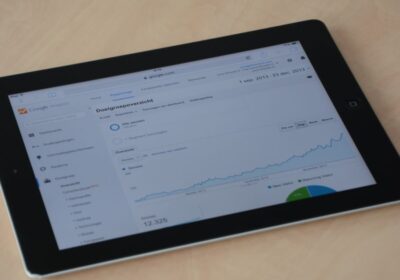
Microsoft Clarity’s AI Visibility reporting covers grounding queries, citations, share of authority and competitive topic visibility, according to a Microsoft Advertising post from August 12. Grounding queries are the lookups an AI system runs to find supporting information for an answer. The same post describes query fan-out, where one prompt about the best CRM for a mid-sized B2B company expands into several retrieval paths, such as CRM platform comparisons and long sales cycle customer management.
Simon Poulton, EVP Innovation & Growth at Tinuiti, is quoted in that post saying: “Share of Authority is the metric our clients have needed and didn’t have a name for.”
A metric with a new name needs a stated denominator. In August, Clarity added branded query segmentation to its citations dashboard, so the Share of Authority card breaks out results by branded and non-branded queries. Branded queries reference a brand directly. Non-branded ones are the broader, generic queries the AI system uses to help answer a prompt. Clarity now lets customers customize the Brand Terms behind that split. Clarity pre-populates the list, and users can add abbreviations, alternate spellings, localized names, translations and common typos, group terms under a Brand Name, and filter at either level.
Where the two releases meet
Our read is that the two designs put the control in different places. In CTV, the definitions are shared across the industry and disclosure is the control: a buyer can ask a vendor how a number was built. In AI visibility, the definition is local to each account and a settings page is the control: the person who owns the Brand Terms list decides which queries count as direct brand visibility and which count as category discovery.
Either way, a figure that reaches a CFO deck depends on choices most readers never see. Clarity says current Brand Terms improve classification accuracy and reporting quality. By our inference, which Clarity’s posts do not address, adding a common misspelling will move queries from one bucket to the other with no change in how any AI system retrieves content. A trend line could rise or fall on a settings edit alone.
Google’s guidance on generative AI content makes a related point about small text. The Search Central page, last updated October 1, says to manually factcheck and review all AI-generated content before publishing, and that the review also applies to metadata such as title elements, meta description elements, structured data and image alt text. Labels and descriptions get the same scrutiny as the main text.
What it means for the marketing leader
Definitions now sit in the same risk category as data quality. Four checks follow from the sources above.
First, before comparing ROAS across CTV vendors, ask each one how it filters GIVT and SIVT, how it handles TV-off devices, and whether its reach is observed or modelled. IAB Europe’s layers give that conversation an order. Our earlier reports on outdoor ads joining the CTV measurement stack and on marketing mix modeling as an audit system cover the same need for stated methods.
Second, treat the Brand Terms list as a controlled document with an owner, a change log and a date for each edit. Annotate trend charts at every change.
Third, ask any AI visibility vendor how it classifies queries and whether customers can change that classification. For background, see our report on AI visibility tools tracking Meta’s Muse agent.
Fourth, put generated metadata in the same review queue as generated copy, as Google’s page describes.
A single exercise for next week
Pick one number from your last board report. Write down the definition behind it, who last changed that definition and when. If nobody can answer, that number is the first one to fix.
Source: IAB Europe